When supporting people in a Supported Independent Living (SIL) environment, being prepared for an emergency is an important part of providing safe, high-quality care. Whether assisting with personal care, daily living activities, or community participation, support workers are often the first people available to respond if an incident occurs in a participant’s home.
Emergencies can happen without warning. A participant may experience a fall, choking incident, seizure, allergic reaction, or sudden medical event that requires immediate action. Having current CPR and First Aid training gives support workers the knowledge and confidence to respond quickly while waiting for emergency services to arrive. For participants and their families, it also provides reassurance that support is being delivered by properly trained staff.
Why First Aid Training Matters in SIL
Supported Independent Living is designed to help people live as independently as possible while receiving the assistance they need with daily activities. Because support is often provided in a home setting, workers must be prepared to manage a wide range of situations that may affect a participant’s health, safety, or wellbeing.
First Aid and CPR training play an important role in meeting the safety expectations of the NDIS and supporting positive participant outcomes. These skills help workers respond appropriately in emergencies, reduce risks, and provide immediate care until professional medical assistance is available.
First Aid Requirements for SIL Support Workers
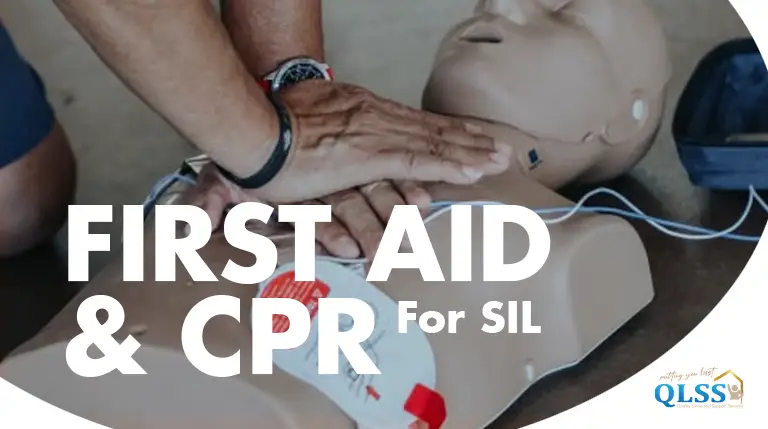
In Queensland, the standard qualification expected for SIL support workers is Provide First Aid (HLTAID011). This nationally recognised course includes CPR training and covers a broad range of first aid situations that may arise when supporting people with disability.
The course teaches participants how to assess emergency situations, provide basic first aid, perform CPR, and respond to common medical incidents. It is recognised across Australia and is commonly required by NDIS providers and employers throughout the disability sector.
In addition to the full First Aid qualification, support workers are required to maintain a current Provide Cardiopulmonary Resuscitation (HLTAID009) certification. While the First Aid certificate remains valid for three years, CPR skills must be refreshed every 12 months to ensure workers remain confident and competent in life-saving techniques.
Additional Training That May Be Beneficial
Depending on the needs of the participants being supported, additional training may be recommended. Courses in anaphylaxis management and asthma management can be valuable for workers supporting individuals with known allergies or respiratory conditions.
These additional qualifications can help workers tailor their support to the specific needs of participants while strengthening overall safety and risk management practices.
Keeping Certifications Current
One of the most common compliance issues in the disability sector is allowing CPR qualifications to expire. While support workers may hold a valid First Aid certificate, CPR requires annual renewal.
Maintaining up-to-date qualifications demonstrates professionalism, supports compliance requirements, and helps ensure participants receive safe and competent care. Many training organisations offer standalone CPR refresher courses, making it easy to remain current between full First Aid renewals.
All support workers at QLSS are required to hold current First Aid and CPR certifications so we can maintain the highest level of care.
Accessing Training in Queensland
A range of Registered Training Organisations (RTOs) deliver nationally recognised First Aid and CPR courses throughout Queensland. Training is available through public courses, workplace group bookings, and private sessions.
In Townsville and surrounding areas, First Aid training can often be completed in a single day, combining practical hands-on learning with essential emergency response skills. When selecting a training provider, it is important to choose an accredited organisation that issues nationally recognised qualifications and includes practical assessment components.
Supporting Safer Outcomes for Participants
At QLSS, participant safety is a core priority. Maintaining current CPR and First Aid qualifications helps ensure support workers are prepared to respond confidently and effectively should an emergency arise.
For SIL participants, families, and Support Coordinators, knowing that staff are trained in emergency response provides an added layer of confidence and peace of mind. While everyone hopes these skills are never needed, ongoing training and regular refreshers help create safer living environments and support better outcomes for the people we assist every day.