
Medium Term Accommodation (MTA)

Medium Term Accommodation while you wait for SDATemporary Housing While You Transition to Your Long-Term Home

Sometimes the right long-term home isn’t quite ready when you need it.

Medium-Term Accommodation (MTA) provides temporary housing for NDIS participants who are waiting to move into their approved long-term accommodation. It helps bridge the gap between where you are now and where you’ll be living in the future.

At QLSS, we understand that housing transitions can be stressful. Our team works closely with participants, families, Support Coordinators and healthcare professionals to ensure people have safe, suitable accommodation and support during this important transition period.
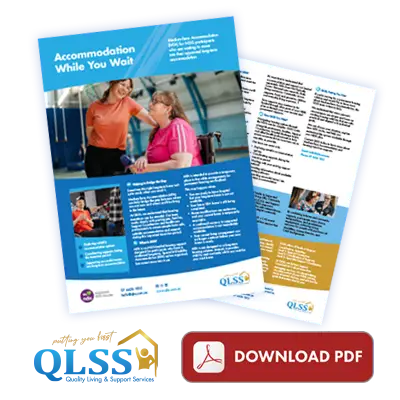

MTA Fact Sheet

We know you are busy, so we’ve got all the important information in a flyer for you to read online later or print easily. 

Download now to share with your family, clients or colleagues!

What is Medium-Term Accommodation?

Medium Term Accommodation MTAMedium-Term Accommodation is an NDIS-funded housing support designed for participants who have a confirmed long-term housing option, but cannot move into it yet. MTA is intended to provide a temporary place to live while arrangements for permanent housing are finalised.

This may happen when:

  • You are ready to leave hospital but your long-term home is not yet available.
  • Your future Specialist Disability Accommodation (SDA) home is still being completed.
  • Home modifications are underway and your current home is temporarily unsuitable.
  • A confirmed vacancy in supported accommodation is not immediately available.
  • Your current living arrangement can no longer continue before your new home is ready.

MTA is not designed as a long-term housing solution. Instead, it provides stability and continuity while you wait for your next home.

Who Can Access MTA?

To be eligible for medium term accommodation, you must meet all 3 criteria.

  1. You have a long-term home you’ll move into after medium term accommodation.
  2. You can’t move into your long-term home yet because your disability supports aren’t ready.
  3. You can’t stay in your current accommodation while you wait for your long-term home.

What Does MTA Funding Cover?

MTA funding is specifically intended to cover the cost of temporary accommodation while you wait for your permanent housing arrangement.  MTA includes:

Temporary Housing Costs

It only covers the cost of the accommodation. It doesn’t include other living costs such as food, internet or electricity.

Furniture

QLSS MTA properties are furnished to support daily living tasks.

It’s important to understand that accommodation and support are funded separately. MTA Does Not Typically Cover: Personal care supports, Daily living assistance, Community access supports, Food and groceries, Utilities and everyday living expenses. These supports may continue to be funded through other parts of your NDIS plan or through your own income and government supports.

How QLSS Can Help

Navigating housing options through the NDIS can be complex. QLSS works alongside participants, families, Support Coordinators, hospital discharge teams and allied health professionals to help ensure accommodation transitions run as smoothly as possible.

Our team can assist with:

  • Exploring suitable accommodation options
  • Coordinating supports during the transition period
  • Working with your existing support network
  • Providing information about available housing pathways
  • Supporting successful moves into long-term accommodation

We understand that every person’s circumstances are unique and focus on creating housing solutions that are safe, practical and aligned with individual goals.

Need Help Understanding MTA?

If you’re waiting for a permanent housing solution and would like to learn more about Medium-Term Accommodation, the QLSS team is here to help.

We can discuss your situation, explain how MTA works, and help you understand the options available through your NDIS plan.

Contact QLSS today to learn more about Medium-Term Accommodation and housing transition supports.

...early on it was highlighted that a potential transition for the client appeared to be only possible by moving the client from one institutionalised and restrictive environment to another, however QLSS not only successfully transitioned the client into the community, but done so in an unrestricted way which not only promoted exceptional quality of life for the client but also promoted the clients human rights at all times.